Short answer
No.
iVisa is a commercial visa and travel document service. It is not affiliated with the Royal Thai Immigration Bureau. iVisa charges a fee to file the TDAC on your behalf. The TDAC itself is free.
The official TDAC site is:
Longer answer
In late March 2026, the Bangkok Post reported that Immigration Bureau spokesman Pol Maj Gen Choengron Rimpadee issued a public warning naming specific non-official sites that were charging fees for the free TDAC. iVisa was among the named sites.
iVisa has not been shut down or sanctioned. It is a legal commercial service in the countries where it operates. But it is not the TDAC, and it is not endorsed, licensed, or recognized by Thailand’s immigration authority.
If you paid iVisa for a TDAC submission, one of three things happened:
- iVisa filed the real TDAC on your behalf and kept the fee. Your arrival card is valid. You overpaid.
- iVisa filed a different form (e.g. a Thailand eVisa) and sent you a generic confirmation. You may still need to file the TDAC separately.
- iVisa filed nothing and you will be asked to fill a TDAC on arrival. This is rare but reported.
If you’re not sure which case applies, check your email for a confirmation that ends in @tdac.immigration.go.th or contains a QR code with tdac in the URL. If it does, the TDAC itself was filed. If it does not, you will need to file one before travel.
Other sites people ask about
Paid middleman sites show up in Google results for “thailand arrival card” or “TDAC” depending on the day. None of them are the official TDAC. They charge for a form the Thai government provides for free.
Is ivisa.com/thailand the official site?
No, same as the short answer above. iVisa is a legal commercial middleman, not a Thai government service. See the full explanation at the top of this page.
What about other lookalike domains?
Periodically you’ll see domains like official-tdac.org, tdac-gov-th.net, or other variants that try to mimic an official-looking name. Pattern recognition is more valuable than a fixed list:
- Any domain not ending in
.go.this not the Thai government. - Any site charging a fee is not the official TDAC. The Thai immigration bureau collects no payment for this form.
- Any site asking for a passport photo upload is not the official TDAC. The official form is text fields only.
If a domain meets any of those criteria, treat it as untrusted regardless of whether it is on a published warning list.
The scam gallery
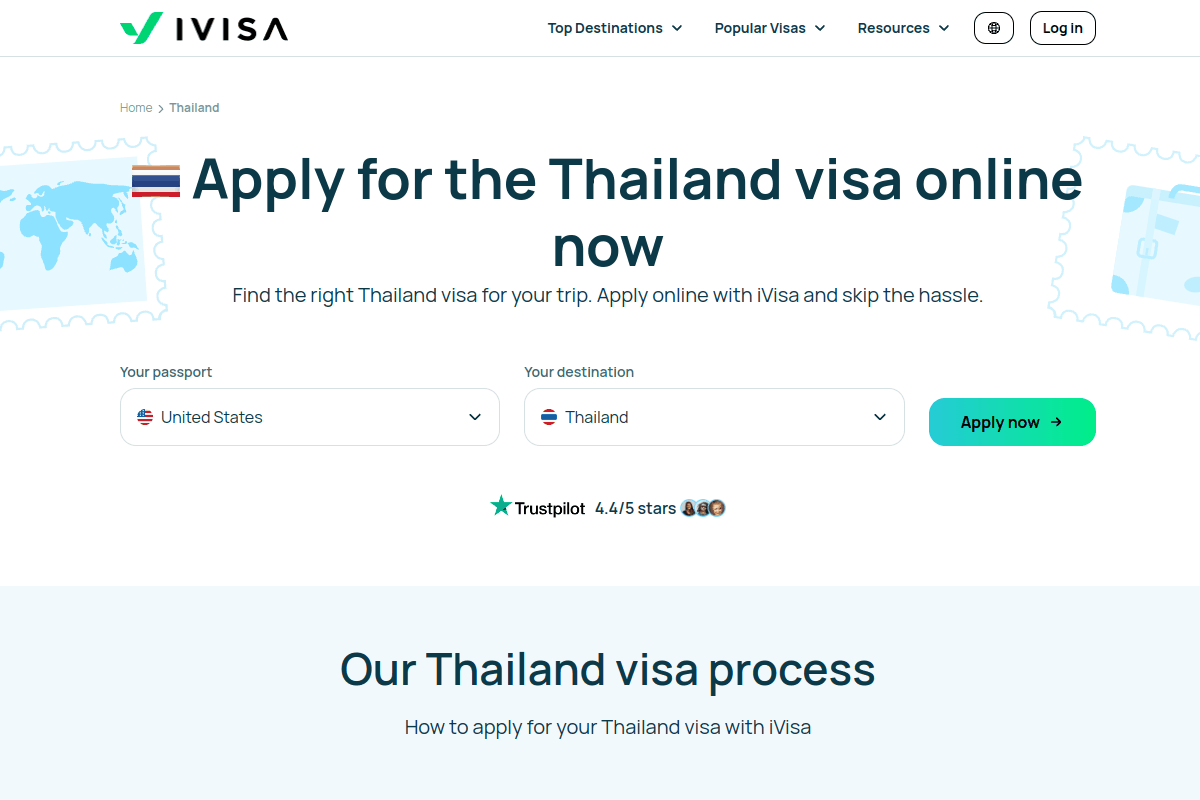
The site above has been documented charging fees for the free TDAC. Screenshots captured April 2026 and archived on Wayback Machine.
How to tell any TDAC site is not the real one
A checklist you can apply to any site that shows up in your search results:
- Does the domain end in
.go.th? If no, it is not a Thai government site. Period. - Does it ask for payment? The TDAC is free. Any fee means a middleman.
- Does it ask for a photo of your passport? The official TDAC does not. You type values. No upload.
- Does the URL contain extra words like “apply”, “official”, “gov” but not
.go.th? Those words are bait. The real domain is boring:tdac.immigration.go.th. - Does the page have trust badges, testimonials, or countdown timers? The official Thai immigration form has none of these. Government forms are ugly and functional. That is the tell.
What to do if you’ve already paid
Contact your credit card issuer and dispute the charge. US cardholders: most major issuers (Chase, Amex, Capital One) recognize “service not rendered” or “misleading merchant” disputes for this category. Include a screenshot of the official TDAC site showing it is free, and reference this article as secondary evidence.
Success rates are higher when the dispute is filed within 60 days of the charge.
If the middleman did actually file a real TDAC for you (cases 1 or 2 in the short answer above), your arrival card is still valid and you do not need to refile. You are disputing the fee, not the submission.
If no real TDAC was filed (case 3), file one yourself at the official site (tdac.immigration.go.th) before you travel. It takes 8 minutes.
If you do not trust this page, start with the artifacts. How to fact-check us shows the official URL TOML files, the DNS-audited scam list, and the validator source.